
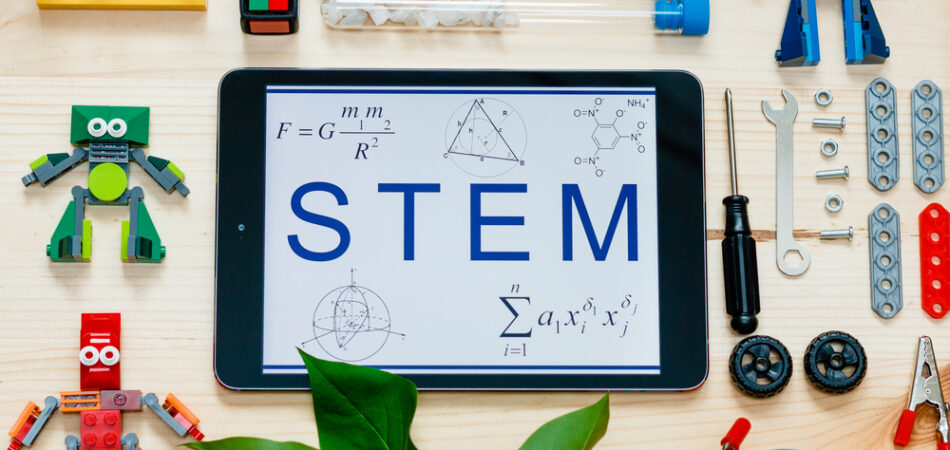
Science, Technology, Engineering, and Mathematics (STEM) are no longer reserved for high school or college curricula. Instead, they are becoming essential components of early childhood education. Parents, educators, and policymakers alike are recognizing the lasting benefits of engaging children in STEM from the preschool years. Early exposure builds foundational skills that foster curiosity, problem-solving, and a lifelong love of learning.
As our global economy becomes increasingly reliant on technological innovation and scientific advancement, ensuring children have a strong start in STEM is more than an educational trend—it’s a societal necessity. When children explore STEM concepts through age-appropriate activities, they’re not just learning facts and figures. They’re developing the cognitive and emotional skills that will carry them through school, work, and life.
The Science Behind Early STEM Learning
Research consistently supports the idea that children’s brains are most adaptable during their earliest years. Between birth and age five, neural connections form at a rate faster than at any other point in life. These years are a critical window for learning, particularly for the kinds of exploratory, hands-on learning that STEM encourages. Introducing STEM in early childhood taps into children’s natural inclinations toward curiosity and discovery.
Preschoolers are natural scientists. They ask questions, explore environments, and seek to understand how things work. Early STEM education takes advantage of this developmental stage by providing structured but playful experiences that deepen their understanding of the world. When children observe how water flows, build structures with blocks, or explore shadows and light, they’re engaging in foundational scientific inquiry.
These experiences are not only academically beneficial but also support social-emotional development. Collaboration, perseverance, and communication are all integral parts of hands-on STEM activities. Children learn to share ideas, work in groups, and develop confidence as they see their ideas come to life.
Preschool STEM Activities: Making Learning Fun and Effective
One of the key reasons early STEM education is so impactful is that it seamlessly blends play with learning. Preschool STEM activities are carefully designed to be developmentally appropriate while introducing core STEM principles in fun and engaging ways. These activities are often inquiry-based, allowing children to pose questions, make predictions, and test their hypotheses.
Simple experiments like observing how different materials float or sink, creating ramps to learn about motion, or planting seeds to understand growth cycles are perfect for young minds. These types of preschool STEM activities can be easily incorporated into classroom settings or home routines without the need for advanced tools or technology. Everyday objects and natural materials provide rich learning opportunities.
What makes these activities so powerful is their ability to capture children’s attention while subtly building critical thinking and problem-solving skills. Children learn through trial and error, testing their ideas and adapting their approach when things don’t go as expected. This resilience and adaptability are key traits for future success—not just in STEM fields, but in life.
Hands-On Learning for Preschoolers: Building Skills Through Experience
Hands-on learning for preschoolers is at the heart of effective STEM education. Unlike passive learning methods where children memorize information, hands-on approaches require active participation. This type of learning is tactile, sensory-rich, and encourages deep engagement. It helps children internalize concepts by experiencing them directly rather than hearing about them secondhand.
Whether it’s using measuring cups to understand volume, stacking objects to learn about balance, or using magnets to explore forces, hands-on STEM experiences make abstract ideas tangible. These activities often encourage children to use multiple senses, which not only enhances memory retention but also caters to a variety of learning styles.
Moreover, hands-on learning nurtures creativity and innovation. When children build structures with different materials or design solutions to simple challenges, they’re not just following instructions—they’re thinking like engineers and inventors. This fosters an early sense of agency and self-efficacy that builds confidence in their abilities to explore, create, and contribute.
Parents and educators play a crucial role in facilitating these experiences. By providing open-ended materials and encouraging exploration, adults create an environment where learning is guided by curiosity. It’s not about having the right answer; it’s about discovering new possibilities and enjoying the process of learning itself.
Overcoming Barriers to STEM in Early Childhood Education
Despite the clear benefits, introducing STEM in early childhood is not without challenges. One major barrier is the misconception that STEM is too advanced for young children. Some educators and parents may feel unprepared to teach STEM subjects, believing they need a background in science or technology to be effective. However, early STEM education does not require complex theories or technical jargon—it requires a shift in mindset toward exploration and inquiry.
Another challenge is access. Not all early learning environments are equipped with the resources or support needed to implement quality STEM programs. Bridging this gap involves increasing awareness about the importance of early STEM education, providing professional development for educators, and making materials accessible and affordable for all learning communities.
Curriculum design is also key. Effective programs integrate STEM seamlessly into daily activities rather than treating it as a separate subject. This ensures children engage with STEM concepts throughout the day, whether it’s during storytime, outdoor play, or snack preparation. With the right training and support, even the simplest activities can become powerful STEM learning experiences.
Cultural attitudes can also influence how STEM is introduced. Encouraging diversity in STEM from an early age is critical to ensuring all children see themselves as capable learners. Representation matters. Providing examples of scientists, engineers, and mathematicians from different backgrounds can inspire children and help dismantle stereotypes that might otherwise discourage their interest.
The Long-Term Impact of Starting STEM Early
The benefits of early STEM education extend far beyond preschool. Children who are exposed to STEM concepts early are more likely to develop strong academic skills in mathematics and science later in school. More importantly, they carry with them a toolkit of essential 21st-century skills: critical thinking, collaboration, creativity, and communication.
Early STEM experiences also lay the groundwork for future careers. As the demand for STEM-related jobs continues to grow, equipping children with foundational knowledge and skills gives them a head start. It fosters a mindset that sees challenges as opportunities and views the world through a lens of innovation.
Longitudinal studies show that children who participate in STEM-rich preschool programs are more likely to pursue advanced studies in STEM fields. Even for those who choose different paths, the skills they’ve acquired—like logical reasoning and analytical thinking—are invaluable across all disciplines.
Moreover, early exposure helps reduce achievement gaps. By engaging children from diverse backgrounds in STEM from the beginning, we can promote equity in education and help ensure all learners have access to future opportunities. It’s not about turning every preschooler into a future scientist, but about giving every child the tools to understand and shape the world around them.
Conclusion
Early STEM education is more than a passing trend—it’s a vital investment in our children’s futures. From cognitive development to social skills, from academic preparedness to career readiness, the benefits are profound and far-reaching. When we prioritize introducing STEM in early childhood, we unlock doors to a lifetime of learning and discovery.
Through engaging preschool STEM activities and hands-on learning for preschoolers, we can create dynamic learning environments that nurture curiosity and innovation. Overcoming barriers and ensuring access to quality STEM education for all young learners is a collective responsibility that promises significant returns.
The foundation we build today will shape the problem-solvers, thinkers, and creators of tomorrow. In a world that increasingly depends on technology and innovation, giving children a strong start in STEM is not just a good idea—it’s essential.
Need Childcare Services Near You?
At Happy Hearts on the Hudson our goal is to establish an environment rich in self-expression and self-confidence. Where every child learns the importance of responsibility, decision making, and respect for others. We are a family-owned business caring for children from 6 weeks old to 12 years old. Our teachers strive to develop the children’s skills by engaging their hearts as well as their minds. For fun, care, or child education feel free to stop by or give us a call today!